SQL Server into AWS, without the rewrite
Lift enterprise SQL Server estates onto EC2 with licensing, HA and performance parity intact. Cutover plans that assume the maintenance window is shorter than anyone wants it to be.
Database platform engineer · SQL Server · Minneapolis
Since 2014 inside a Fortune 100 retailer’s SQL Server estate — first running the servers, now engineering the platform they run on, on-prem and in AWS. Corp-to-corp the whole time.
Practice
The common thread is databases that can't go down and companies that need them somewhere else by a date that's already been promised.
Lift enterprise SQL Server estates onto EC2 with licensing, HA and performance parity intact. Cutover plans that assume the maintenance window is shorter than anyone wants it to be.
Availability groups, backup and restore strategy that's actually been restore-tested, patching, capacity, and the unglamorous instrumentation that turns 3 a.m. pages into Tuesday tickets.
Build-out and cutover automated end to end in PowerShell and Terraform, because doing it by hand sixty times is how estates drift. In the lab, I’m wrapping MCP servers and LLM tooling around the same operational surface.
Track
Staying put this long is unusual for a contractor. It's also why the architecture decisions land — I've had to live with every one of them.
SQL Server since 6.5, on contract across telecom, energy, healthcare, government and finance. SSIS, warehouse loads, reporting, and data-center migrations.
At a Fortune 100 retailer: the databases behind the returns operation, then the enterprise platform. Moved a service-tracking system from a SQL Server 2005 cluster to 2017 Availability Groups, and migrated the first on-prem systems to AWS and Azure.
Same client, supporting several hundred SQL Server instances and thousands of vCPUs across on-prem and AWS. Availability Group and Distributed AG engineering, migration and decommission automation in PowerShell and Terraform. After the team split in July 2023, became the team’s go-to SQL Server DBA for decisions and delivery; formally named its lead SQL Server DBA in August 2025.
Selected work
The program was committed to RDS. I built the cost case for EC2 with bring-your-own-license enterprise licensing, took it to leadership, and the direction changed.
SQL Server snapshot backups on AWS were failing across accounts. I drove the remediation with the AWS and infrastructure teams: the production failure rate fell from 25% to 1.6%, non-production to 3%.
Performance triage for a point-of-sale migration to AWS. I validated the database configuration and drove instance right-sizing; the key stored procedure's p95 went from 1.95 s to 28.3 ms, faster than the 71.7 ms on-prem baseline.
SQL Server estate moved to EC2 with the build, configuration and cutover scripted rather than hand-run — so the last instance looks exactly like the first.
In my own lab: custom MCP servers over infrastructure, monitoring and network telemetry — so incident questions get answered by asking, not by opening nine dashboards.
At a Minneapolis investment management firm, I picked up SSIS work the existing development team had been on for a while, and finished it.
The lab
The domain isn't decoration. Failover, backup strategy, reverse proxying, identity, 10-gig optics and agent tooling all got tried here before they went anywhere that matters. It's cheaper to be wrong at home.
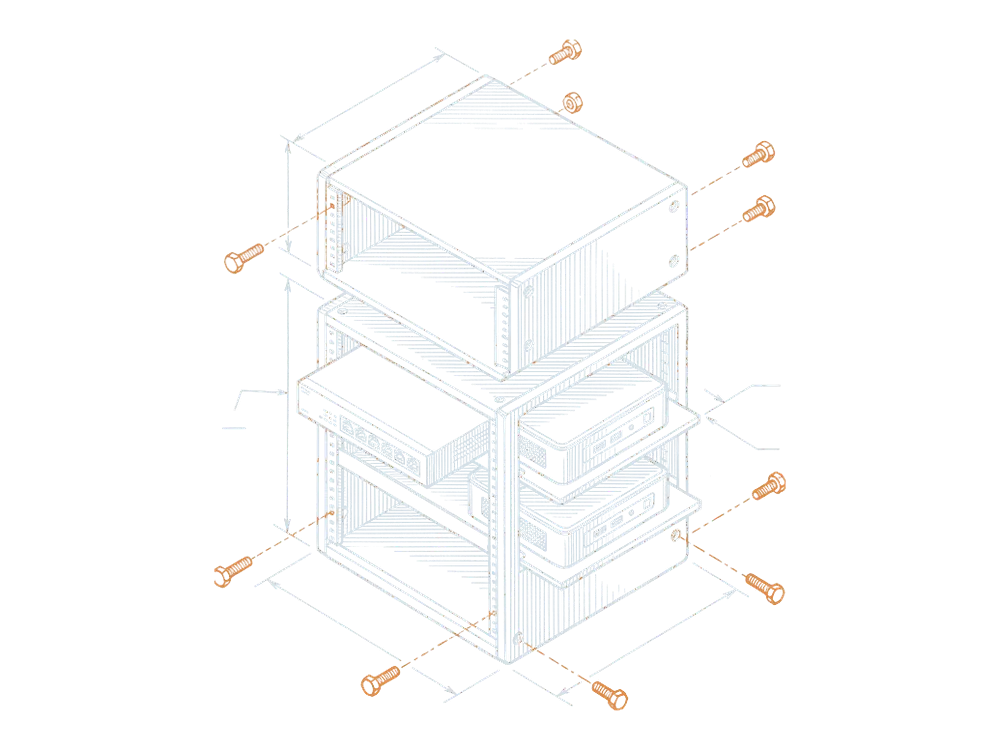
| Layer | What's running | Notes | State |
|---|---|---|---|
| Compute | Proxmox VE on four standalone nodes | Ryzen / Intel micro hosts plus an i9 tower | Online |
| GPU node | i9 tower, RTX 2080 Ti passed through to a VM | Built for local speech models; spare CPU works the video re-encode queue | Online |
| Failover | Paired DNS filters, resolvers, reverse proxies and alerting | Floating VRRP addresses, each pair split across nodes, failover drilled | Online |
| Storage | NAS + Proxmox Backup Server | Nightly backups, offsite to Backblaze B2 and a second site | Online |
| Patching | Rolling weekly updates, one node at a time | Health-gated reboots while the pairs carry traffic | Online |
| Network | UniFi gateway, managed 2.5G switching | 3 Gbps fiber WAN, cold-spare router on the shelf | Online |
| Backbone | Single-mode fiber run between floors | 10G BiDi optics, 40 m invisible-fiber pull | Online |
| Edge | Traefik pair, OIDC proxy, ACME wildcard certs | Nothing internal published unauthenticated | Online |
| Monitoring | Netdata, Loki and scheduled health sweeps | Known faults get a scripted fix, not a second page | Online |
| Automation | Home Assistant + custom MCP servers | Infra, network and telemetry tooling | Online |
| Rack | 10-inch rack, printed in-house | 5U + 3U, PETG, M6 bolt-together | In build |
Off the clock
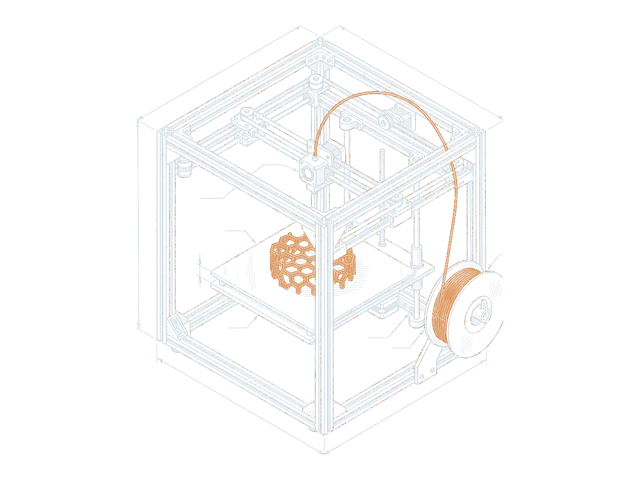
A CoreXY on Klipper and a multicolour machine. Open firmware is a hard requirement — a printer I can't read the source of is a printer I can't fix.
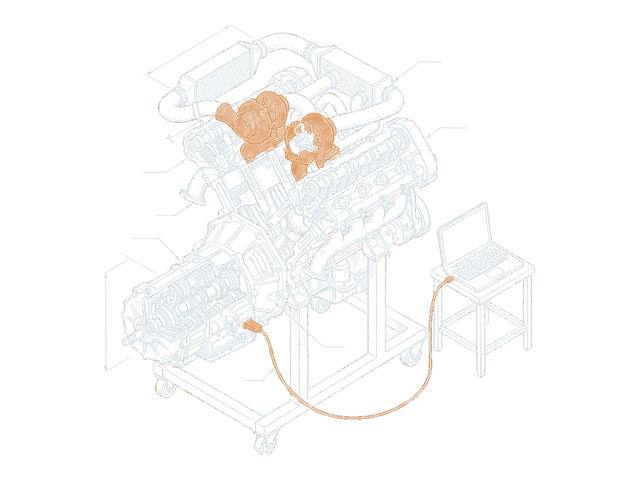
A tuned S6 and an SQ5, both diagnosed on VCDS rather than guessed at. Module addressing, adaptation channels, factory documentation. Same method as a production incident, smaller blast radius.
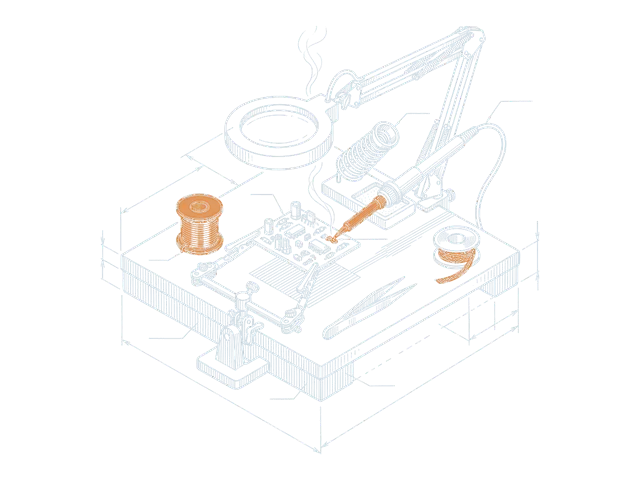
If it's a solder joint, it gets a solder joint. Replacing a working machine over one failed component is how landfills get filled.
Contact
SQL Server on AWS, something on this page, or something in the lab.